
Why filtered tap water is not automatically 100% safe—and why point-of-use water generation deserves serious consideration
Public water systems play an essential role in protecting public health. However, water that meets regulatory standards when it leaves a treatment plant is not guaranteed to remain unchanged throughout its journey to the consumer.
1. Tap water is not risk-free at the point of use
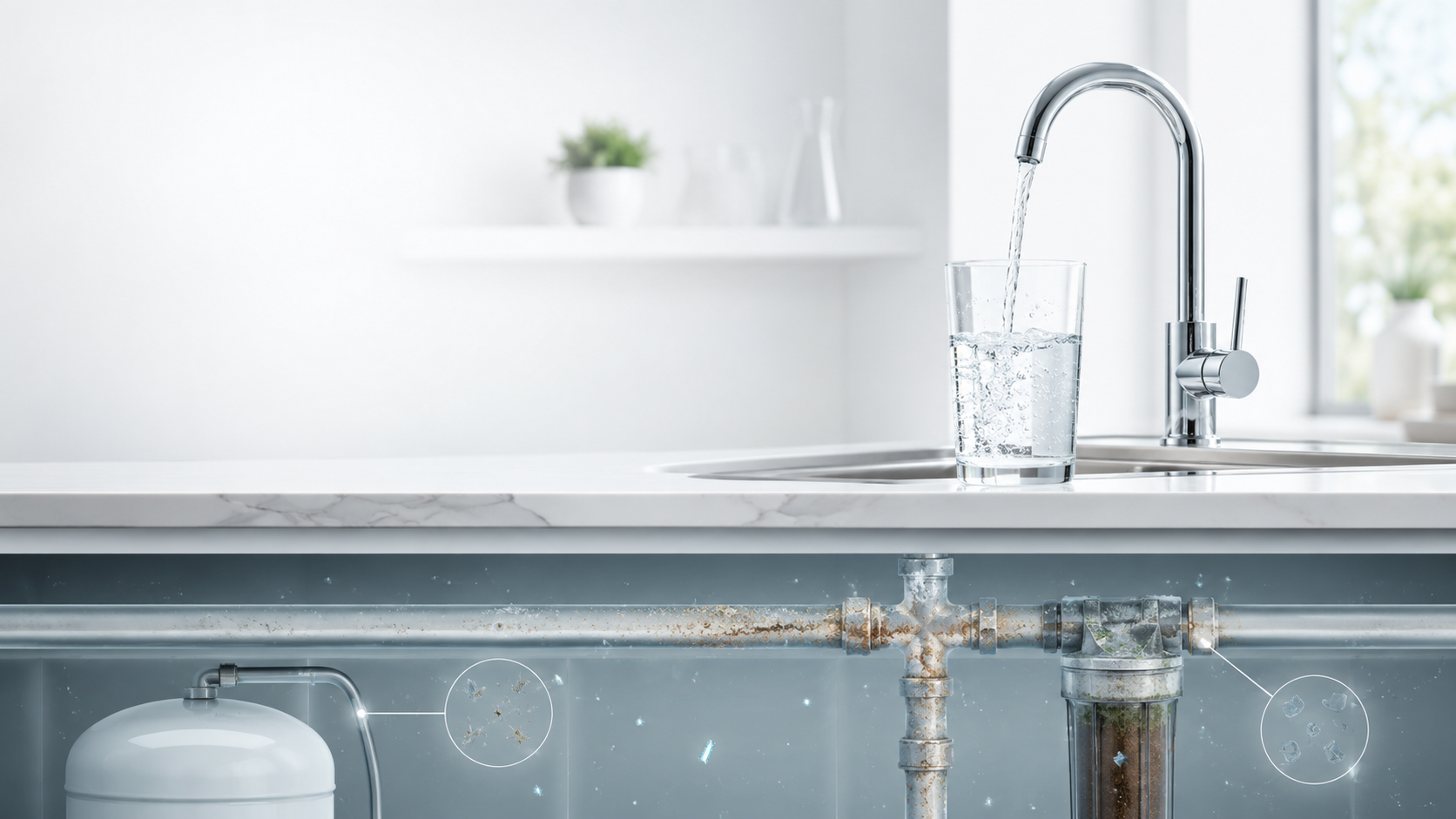
Water quality can be affected by factors beyond the control of the treatment plant, including: –
– Aging or damaged distribution pipes
– Pressure loss and leakage within the network
– Corrosion of pipes, fittings, and faucets Sediment and microbial growth in household or building storage tanks – – Poorly maintained plumbing systems
– Contamination during storage or at the dispensing point
Consequently, the water reaching a household may not have exactly the same quality as the water leaving the treatment facility. A household filter does not automatically eliminate these risks.
The CDC explains that filters designed to remove certain germs may not remove chemicals, while systems that reduce chemicals may not protect against microorganisms. Many carbon filters used in pitchers and refrigerators are primarily intended to improve taste and odor—not to make contaminated water safe. CDC: Choosing Home Water Filters
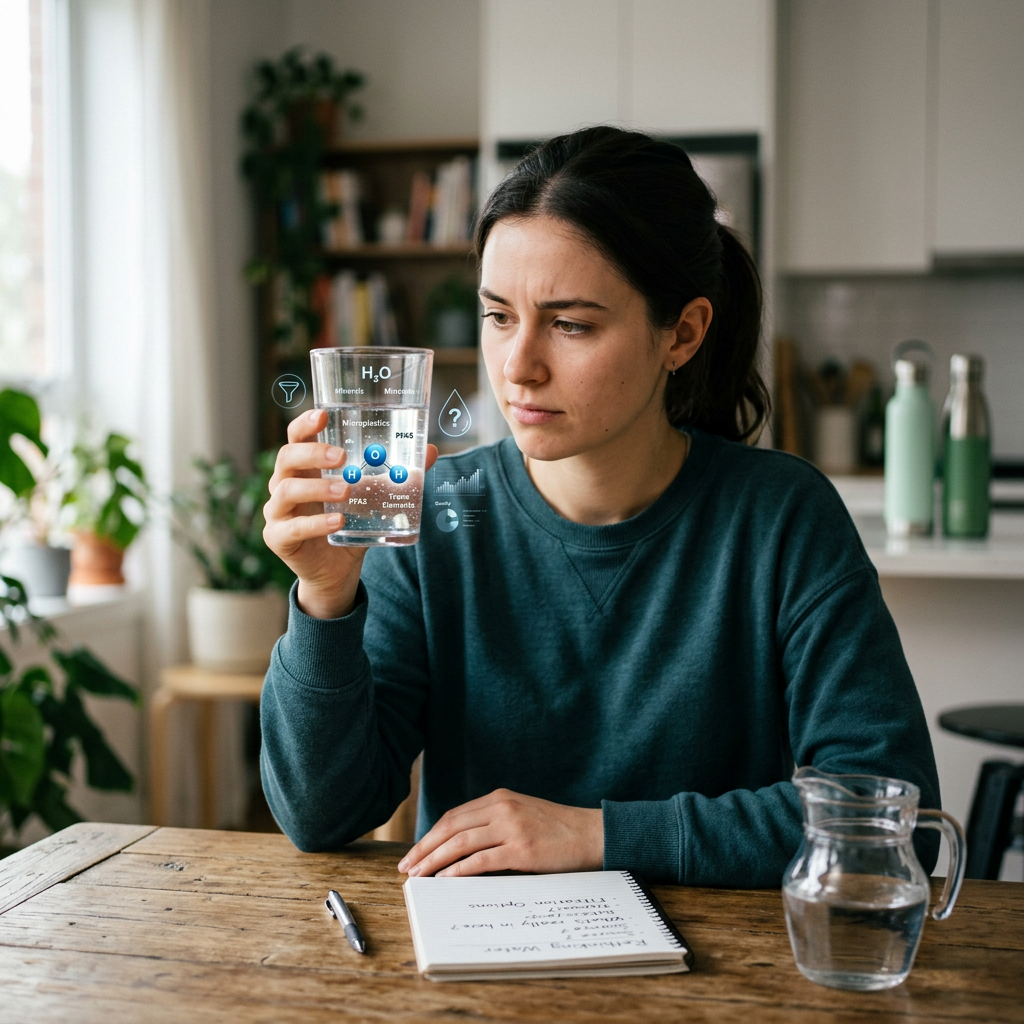
2. Water filters can become sources of microbial growth
Activated carbon commonly removes residual chlorine from tap water.
Although this improves taste and odor, it also reduces the water’s remaining protection against microbial growth.If a filter cartridge is used beyond its recommended service life, the unit is left unused for extended periods, or its internal components are not properly cleaned and disinfected, microorganisms may accumulate in the filter, storage tank, tubing, or faucet.
Water without a chlorine smell is therefore not necessarily cleaner or safer. The smell may have disappeared simply because the disinfectant was removed.
3. Chemical exposure requires a more careful discussion
The presence of a chemical does not automatically mean that the water is dangerous.
Health risk depends on the substance, concentration, duration of exposure, and quantity consumed.Nevertheless, legitimate questions remain concerning long-term exposure to certain contaminants and emerging substances, including: Lead and other metals released from plumbing Pesticides and industrial chemicals Nitrates and disinfection by-products PFAS and other persistent contaminants Chemicals for which monitoring or scientific evidence is still developing
No single household filtration method removes every possible contaminant.
Safety claims should therefore be based on certified contaminant-reduction performance and laboratory testing—not merely on the number of filtration stages or a low TDS reading.
4. Microplastics are an additional concern
Research has confirmed the presence of microplastics in the water cycle, including treated tap water and bottled water.
Microplastics have also been detected in food, air, and living organisms.However, the scientifically accurate position is that their presence has been established, while the extent of the health risk from microplastics in drinking water is still being investigated.
Current evidence raises legitimate concerns, but it does not yet justify claiming that drinking-water microplastics have been conclusively proven to cause specific diseases in humans at typical exposure levels. The World Health Organization continues to identify important evidence gaps and research needs. WHO: Microplastics in drinking-water, WHO: Dietary and inhalation exposure to nano- and microplastics
Producing water where it is consumed
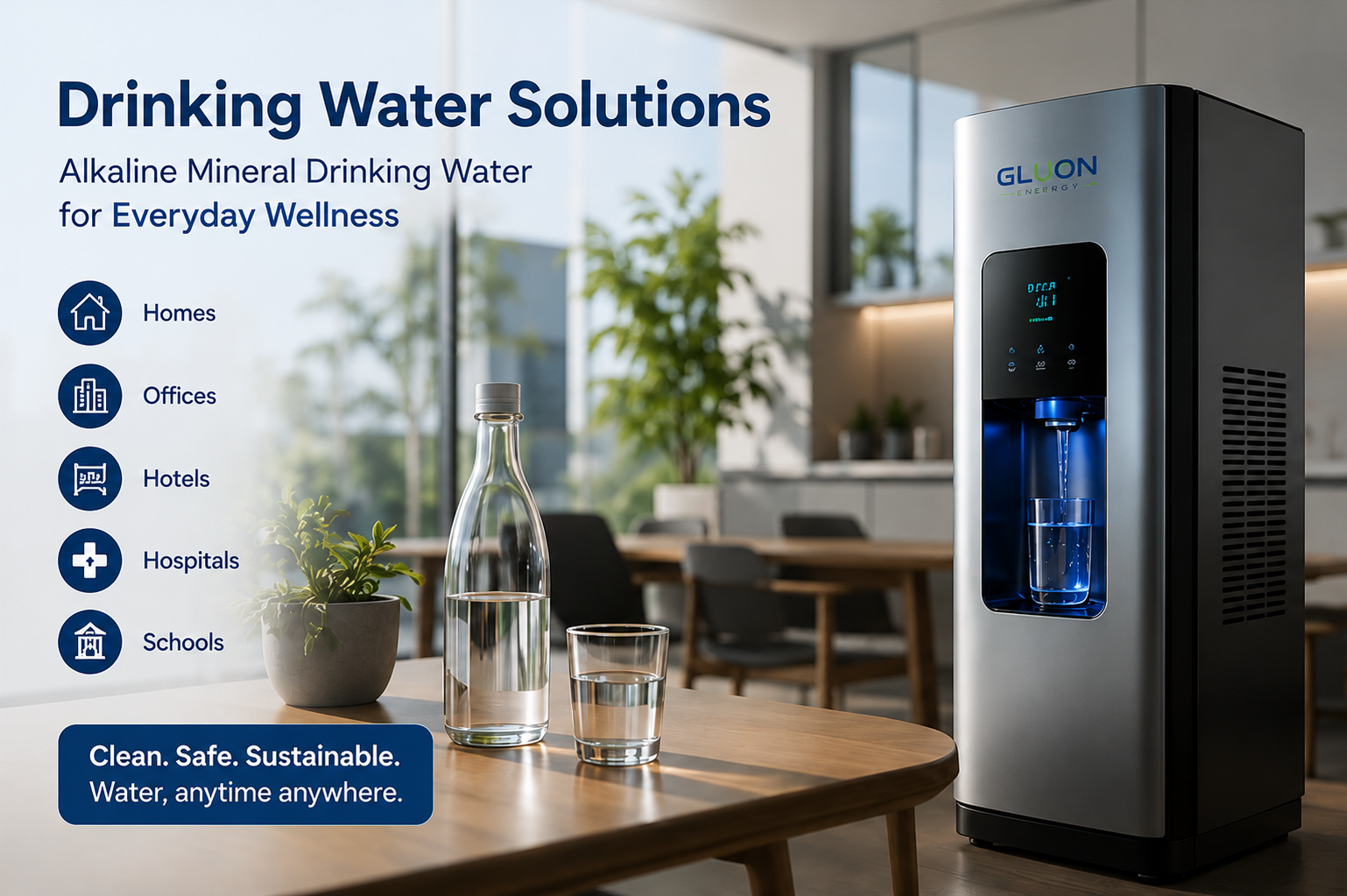
Atmospheric Water Generation, or AWG, offers a fundamentally different approach.
Instead of transporting water through an extensive distribution network, an AWG extracts moisture from the air and produces water close to where it will be consumed.
This point-of-use model can reduce dependence on: –
– Municipal distribution pipelines
– Aging building plumbing
– Rooftop and underground storage tanks
– Plastic bottles and water deliveries
– Long periods of water storage and transportation
Producing and consuming water at the same location can therefore remove several potential contamination points between the central treatment plant and the drinking glass.
Modern AWG technology can incorporate air filtration, condensation, water purification, disinfection, mineral balancing, and controlled dispensing within one system.
When properly engineered, certified, maintained, and independently tested, it can provide a reliable point-of-use drinking-water solution.
The strongest scientifically responsible statement is:
“An Atmospheric Water Generator can reduce many of the external risks associated with centralized water distribution by producing and treating water at the point of consumption. Its safety must be demonstrated through certified treatment performance, hygienic system design, proper maintenance, and regular testing of the water it produces.”
If we can produce our own drinking water, why not?
When a properly certified and maintained system allows households to generate drinking water at the point of use, it deserves serious consideration.The objective is not to create fear about tap water. It is to give people greater visibility, control, and accountability over one of the most important resources they consume every day.Water should not merely look clear or taste pleasant. Its quality should be measurable, verifiable, and consistently managed.
Produce water where you need it.
Treat it where you use it.
Verify its quality before you drink it.
Wishing everyone good health—and wishing peace for our world.