
The Global Water Crisis Is No Longer a Distant Threat
Data centers, microplastic pollution, and climate change are placing unprecedented pressure on the world’s clean-water resources—making decentralized water-generation technology an urgent global priority.
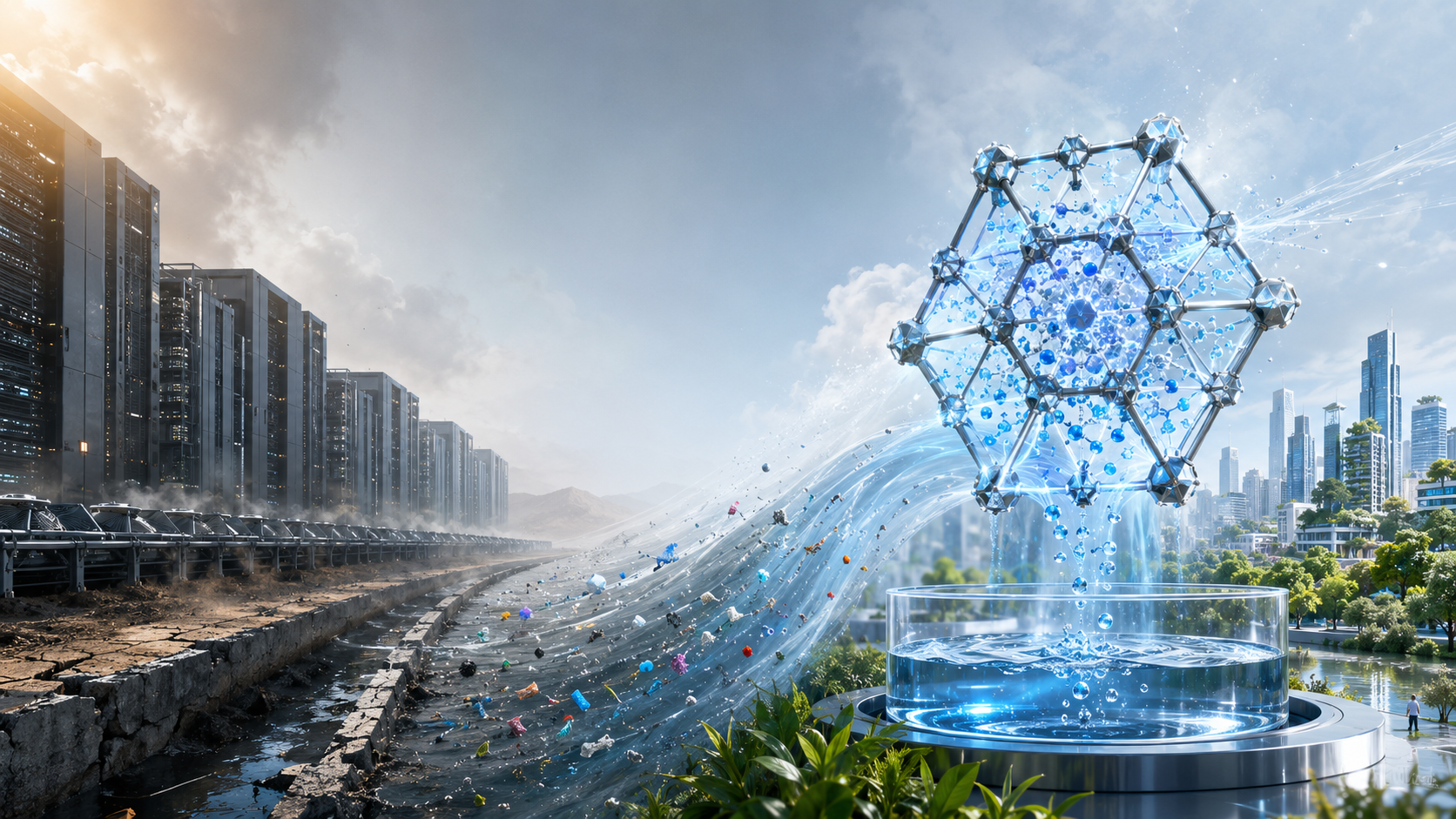
The world is entering a new era of water insecurity.Freshwater resources are being challenged simultaneously by the rapid expansion of data centers, widespread microplastic contamination, and the accelerating effects of climate change. Together, these pressures are exposing a fundamental weakness in the way modern societies obtain and distribute clean water.According to UNESCO, roughly half of the world’s population experiences severe water scarcity during at least part of the year. As demand continues to rise, clean water can no longer be treated as an unlimited resource. UNESCO World Water Development Report
Data Centers: The Hidden Water Cost of the Digital Economy
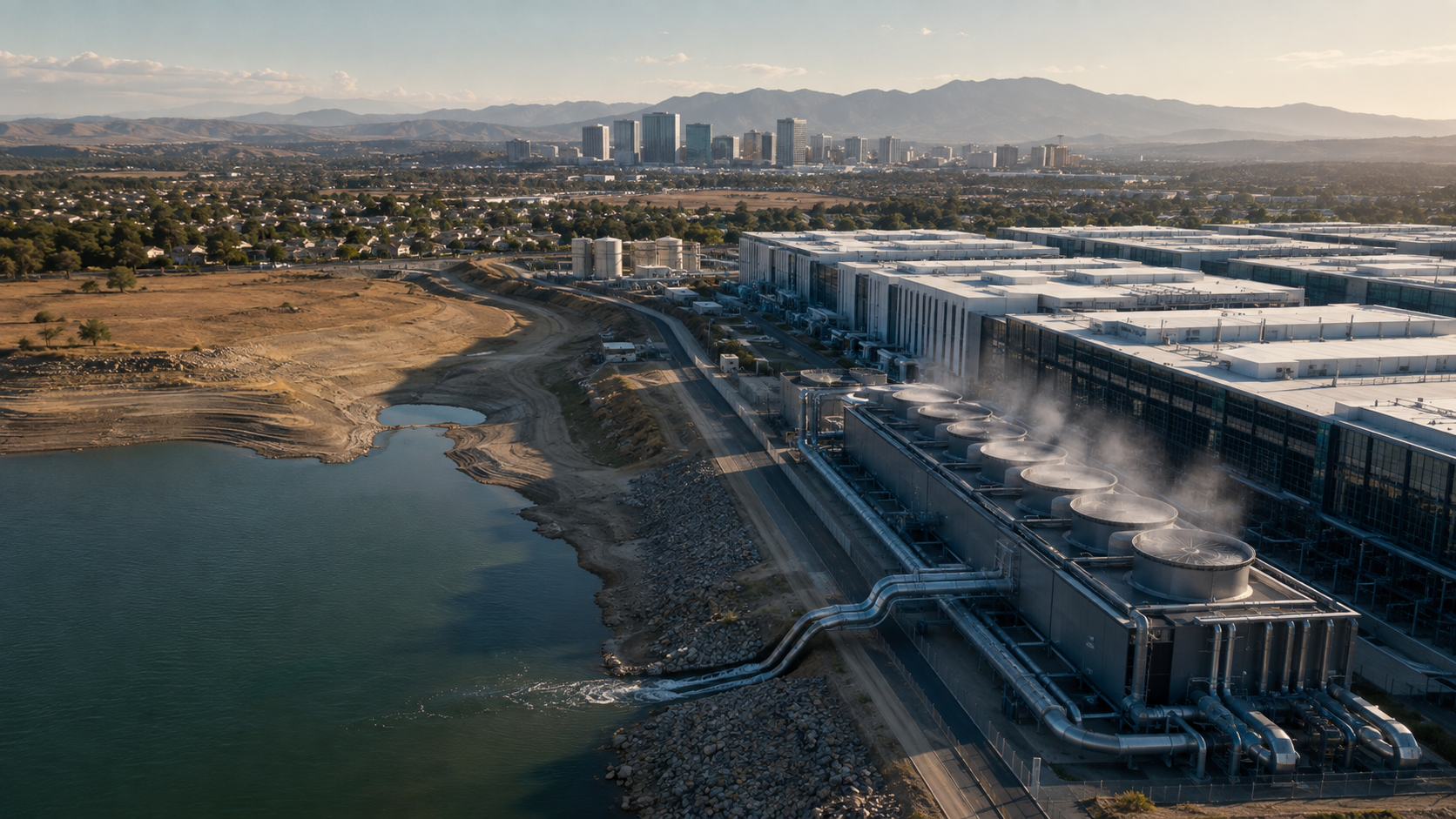
Artificial intelligence, cloud computing, and digital services depend on increasingly powerful data centers.
These facilities generate enormous amounts of heat and often require substantial quantities of water for cooling.
As data-center capacity expands, its water demand can compete with the needs of surrounding communities, agriculture, industry, and natural ecosystems—particularly in regions already facing drought or water stress.
The digital economy cannot be considered sustainable if its growth places further pressure on vulnerable freshwater sources.
Future infrastructure must therefore address not only energy efficiency and carbon emissions, but also water consumption and local water resilience.
Microplastics: Pollution That Has Reached the Water Cycle
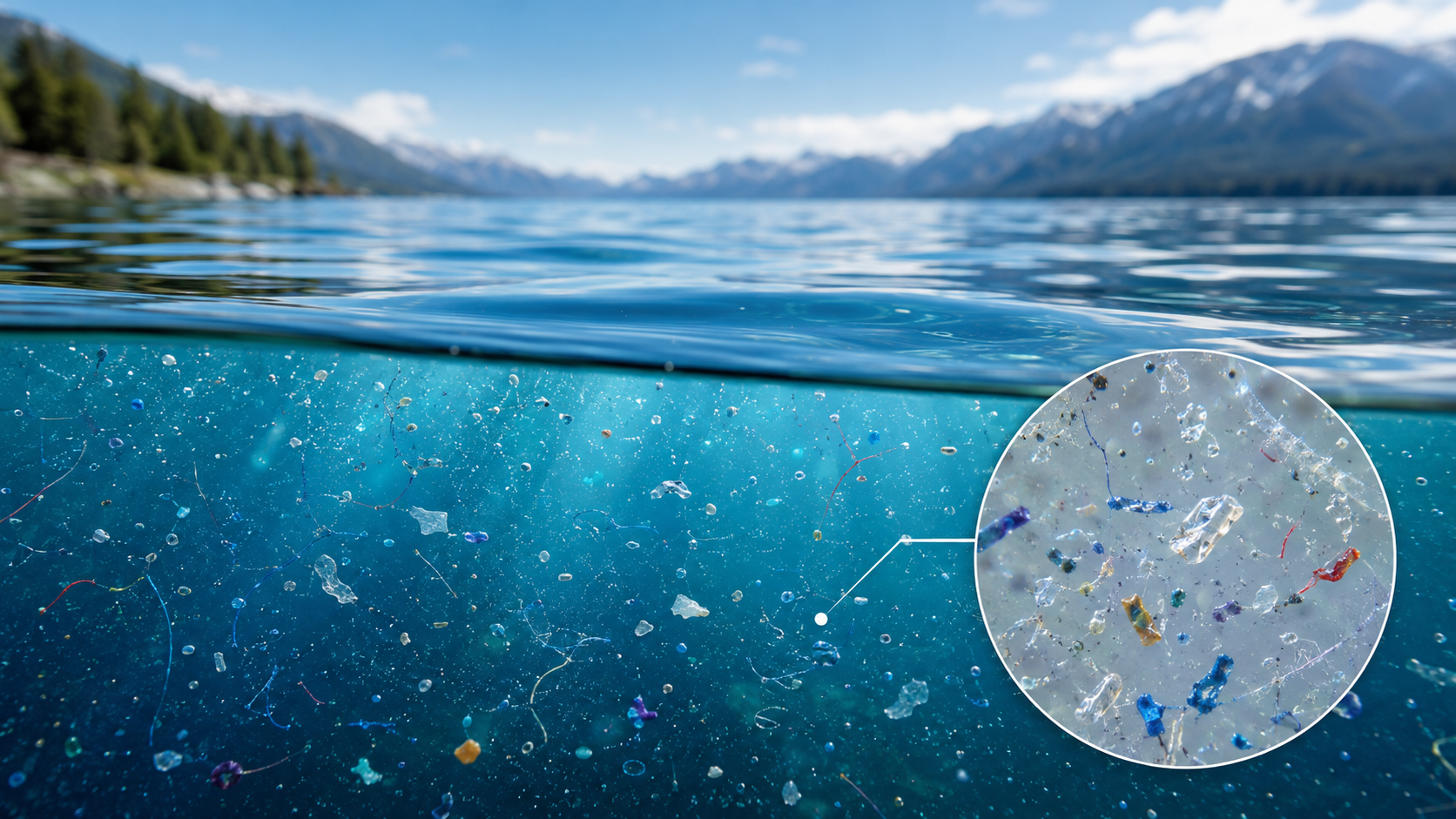
At the same time, the quality of existing water supplies is deteriorating.
Microplastics are now found throughout the environment—in rivers, oceans, soil, air, and water.
These particles originate from the breakdown of plastic waste, synthetic textiles, industrial processes, packaging, and countless everyday products.
Once released, microplastics can travel through ecosystems and enter the food chain.
Scientists are still investigating their long-term effects on human health, but their widespread presence demonstrates that even water appearing clean may be affected by invisible contaminants. United Nations Environment Programme
Climate Change Is Disrupting the Water Cycle
Climate change is intensifying both water scarcity and water instability.
Rising temperatures increase evaporation, dry soils more rapidly, and contribute to longer and more severe droughts. At the same time, a warmer atmosphere can hold more moisture, resulting in heavier rainfall and destructive flooding.
The problem is therefore not simply that the world may have “too little water.” Water is becoming less predictable, less evenly distributed, and increasingly difficult to manage.
The World Meteorological Organization warns that climate change is making the global water cycle more erratic, creating growing risks for communities, food systems, economies, and infrastructure. World Meteorological Organization
Why We Must Learn to Produce Clean Water Independently
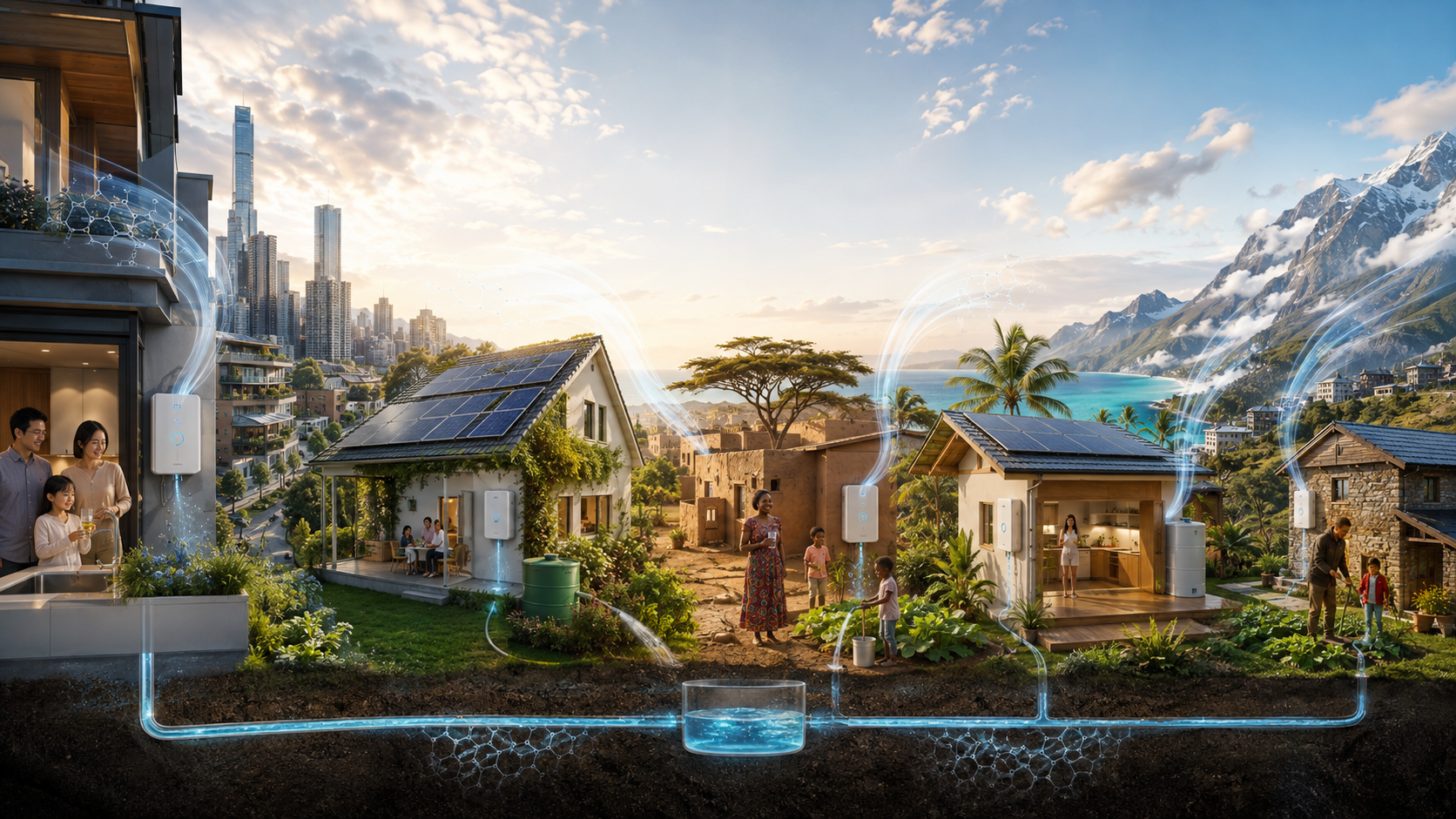
These converging crises make one conclusion unavoidable:
” Humanity must develop the ability to produce clean water wherever it is needed, without relying entirely on distant reservoirs, vulnerable groundwater supplies, plastic bottles, or centralized distribution networks”
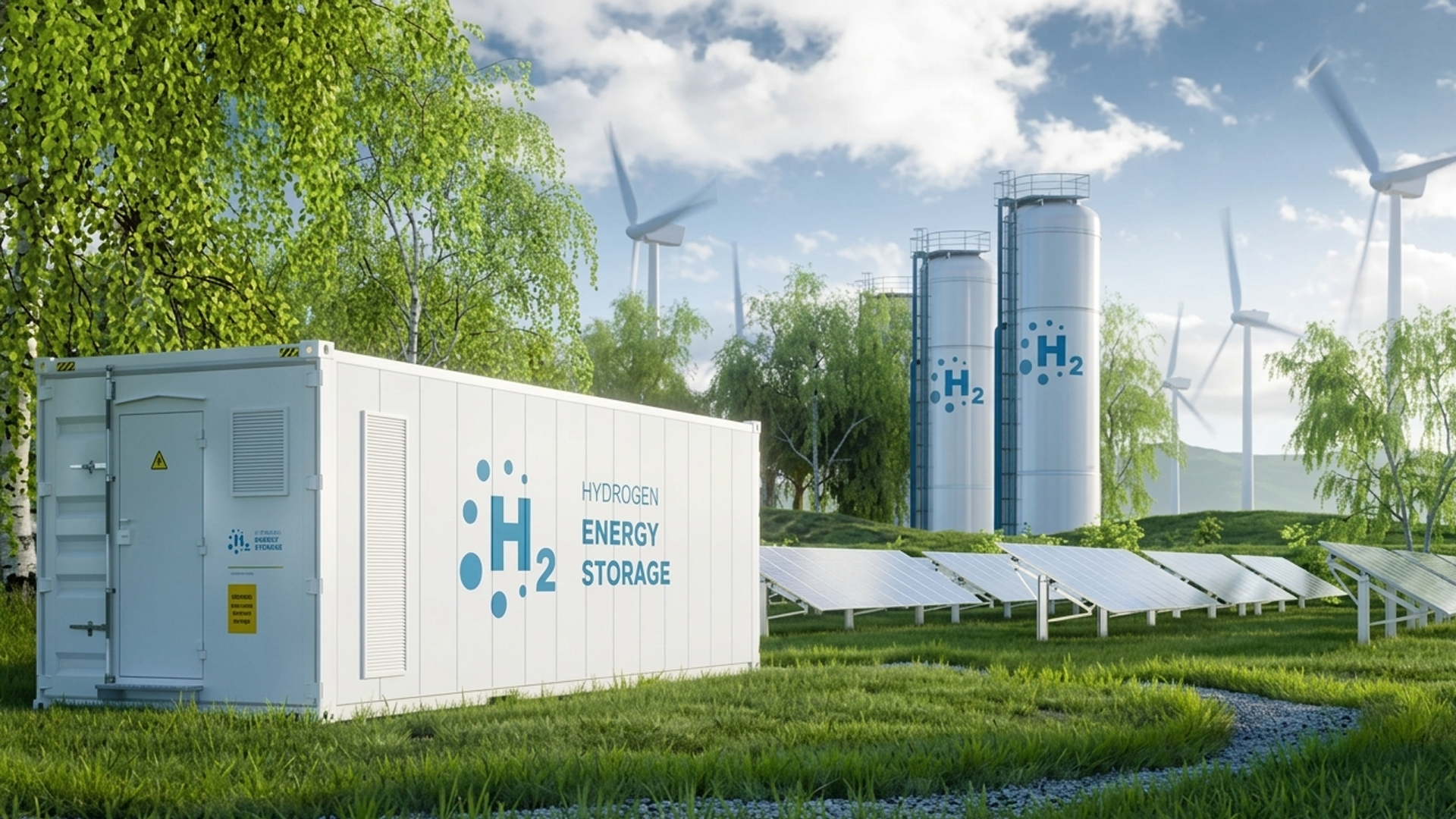
Technologies such as atmospheric water generation, advanced adsorption materials, renewable-energy-powered water systems, high-performance filtration, and intelligent water-quality monitoring could support a new decentralized water model.
Under this model, homes, hospitals, hotels, schools, factories, farms, remote communities, and critical infrastructure could generate or recover part of their own water supply locally.
This would not replace responsible water management or public infrastructure. It would strengthen them by providing an additional, resilient source of clean water.
Water Independence Is Becoming Essential Infrastructure
The next generation of water technology must be efficient, safe, scalable, energy-conscious, and accessible. It must also be designed for real-world conditions—from dense cities and industrial facilities to remote and water-stressed regions.
Water security can no longer depend only on finding new natural sources.
It must also involve creating intelligent systems capable of capturing, producing, purifying, recycling, and managing water responsibly.
The future of water is decentralized.
The future of water is resilient.
And the time to accelerate that future is now.